LVMH IS NOT THE WORLD'S MOST VALUABLE PUBLICLY LISTED FASHON, LUXURY OR BEAUTY COMPANY. L'OREAL IS
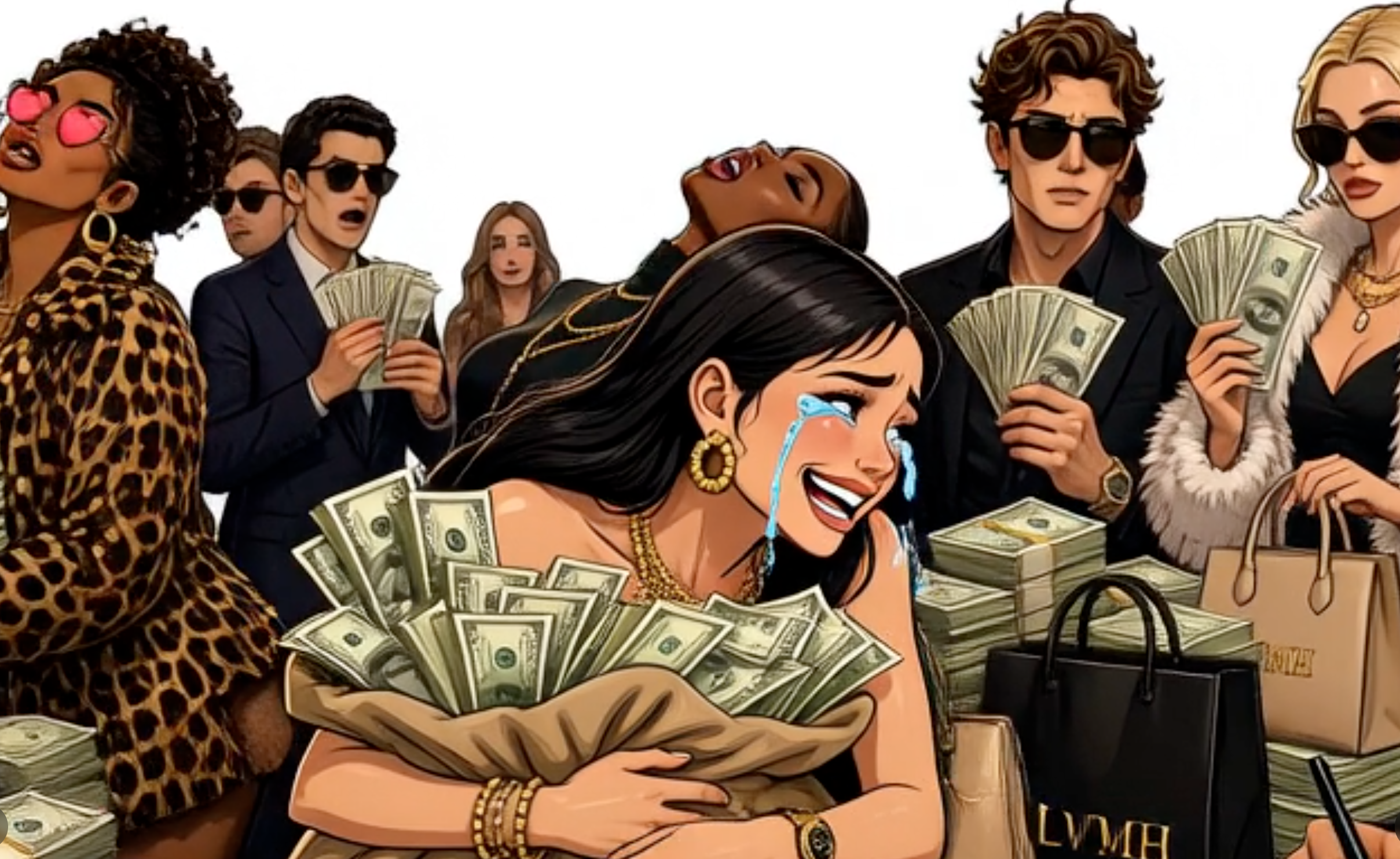
Smart Times · Smart Fashion Council Investor Analysis · October 2026 Market Intelligence The Changing of the Guard For the first time in the modern luxury era, LVMH is not the world's most valuable publicly listed fashion, luxury or beauty company. L'Oréal is. The crown moved quietly, in a market most buyers were not watching. By the Smart Fashion Council Published October 17, 2026 The new ranking · October 2026 #1 L'Oréal $242.94 B 🇫🇷 Clichy · Beauty · founded 1909 overtakes #2 LVMH $219.82 B 🇫🇷 Paris · Luxury · founded 1987 For nearly two decades, Bernard Arnault's conglomerate held an uncontested position at the top of global luxury rankings. At the peak of the 2023 bull run, LVMH briefly became the first European company to cross five hundred billion dollars in market capitalization. The company was not just leading its sector; it was setting the valuation ceiling for an entire category of global capitalism. That ceiling has quietly been lowered. According to the Smart Fashion Council's October ranking, L'Oréal , the Clichy-based beauty giant founded by Eugène Schueller in 1909, is now worth $242.94 billion. LVMH , the Paris house that owns Louis Vuitton, Dior, Tiffany, Bulgari and roughly seventy other maisons, trails at $219.82 billion. The gap is not small. It is approximately $23 billion, and it has opened in roughly five months. Five months ago, LVMH stood at $284.26 billion and L'Oréal at $222.04 billion. The order was conventional, the gap enormous, the hierarchy unquestioned. Then came a summer of translated disappointments. Chinese luxury demand did not recover on the timeline investors had been promised. The dollar strengthened against the euro, mechanically compressing the headline market cap of a company that reports in euros. Moët Hennessy, LVMH's wines and spirits division, continued to burn cash. Over the same window, L'Oréal reported its fastest quarterly sales growth in two years, and the market noticed. Two Frenches, one yardstick What makes this moment interesting is not that one French company overtook another. France remains, in October 2026, the single most valuable national cluster in the Smart Fashion Council ranking. The handover is a reshuffling inside the French delegation, not between it and anyone else. What makes it interesting is what the Smart Fashion Council yardstick shows about both companies at once . Measured in dollars, the handover looks like a changing of the guard: one leader slips, another steps forward. Measured in troy ounces of gold, which is the Council's standard reference against monetary inflation, both companies are deep in the same hole. L'Oréal has lost 54 percent of its real value since April 2023. LVMH has lost 78 percent. The horse race, in other words, is between two runners running backwards. L'Oréal 🇫🇷 France · Beauty · 💄 Apr 2023 USD $250.00 B Today USD $242.94 B In dollars ▼ −2.8% Apr 2023 gold 125.8M oz Today gold 57.8M oz In gold ▼ −54.0% LVMH 🇫🇷 France · Luxury & Fashion · 💎 Apr 2023 USD $470.00 B Today USD $219.82 B In dollars ▼ −53.2% Apr 2023 gold 236.5M oz Today gold 52.3M oz In gold ▼ −77.9% L'Oréal looks almost unchanged in dollars. The headline number dropped by less than three percent in eighteen months, a tiny move for an asset of that size. In gold ounces, however, the company has lost more than half of what it could buy. The dollar reading says "stable giant." The gold reading says "quietly bleeding fifty-four percent of its real purchasing power." LVMH's situation is more dramatic in both frames. In dollars the company is down 53 percent from its April 2023 peak, which is already a visible correction. In gold, it has lost almost four-fifths of its real value. The crown Arnault held for twenty years has not merely been passed to a competitor. It has been melted down and recast, in a mint none of the French regulators control. The horse race in dollars is between two runners running backwards in gold. Smart Fashion Council · October 2026 The sector behind the headline Zooming out from the LVMH-L'Oréal handover, the Smart Fashion Council's October ranking contains a story about the entire sector that the handover both illustrates and obscures. 201 publicly listed luxury, fashion, beauty and eyewear companies are tracked across the four companiesmarketcap.com source categories. Their combined market capitalization is $2.50 trillion. In April 2023, the comparable set was worth $2.69 trillion. Sector in USD −10.0% $2,690B → $2,420B Sector in gold −57.4% 1,354M oz → 576M oz Gold price +111% $1,987 → $4,200 / oz A 10 percent dollar decline over 18 months is unpleasant but survivable; a sector analyst can describe it as a "mid-cycle correction" and nobody will fire him. A 57 percent decline in real purchasing power over the same window is a different kind of story. It is the story of a sector whose participants have, on average, lost well more than half of what their shares can actually buy in the oldest and hardest reference asset the world has ever used to settle accounts. The pattern is almost universal across the Smart Fashion Council's top twenty. Hermès , long held up as the most disciplined luxury house in the world, is down 66 percent in gold. Nike , the largest sports apparel brand on earth, is down 86 percent. Dior is down 74 percent. Inditex , the fast-fashion operational marvel, is actually up 86 percent in dollars (from $105 billion to $195 billion) and still down 12 percent in gold. The headline Spanish winner, measured honestly, is slightly underwater. The one bright spot In this landscape, Compagnie Financière Richemont is the quiet exception. The Swiss watches-and-jewelry house behind Cartier, Van Cleef & Arpels, IWC and Piaget has climbed from $80 billion in April 2023 to $125.60 billion today. In dollars that is a 57 percent gain, essentially the only major luxury name trending upward over the eighteen-month comparison window. In gold, Richemont is down roughly 26 percent, which still constitutes a meaningful real-value decline, but it is roughly a third of what LVMH suffered and less than half of what Hermès gave up. Why Richemont? Several factors converged. The company's exposure to jewelry and hard assets, as opposed to fashion and leather goods, correlates far better with the gold price itself. Cartier serves a client base that is less sensitive to Chinese consumer sentiment than Louis Vuitton's. And Richemont's conservative management (it has refused to join the price-raising cycle that defined LVMH's post-COVID strategy) protected its brand pricing power from the backlash that followed. In a sector-wide dollar decline, Richemont is the house that saw it coming and prepared accordingly. What the top ten look like now # Company Country USD today USD Δ Gold Δ 1 L'Oréal 🇫🇷 France $242.94B −2.8% −54.0% 2 LVMH 🇫🇷 France $219.82B −53.2% −77.9% 3 Inditex 🇪🇸 Spain $195.44B +86.1% −11.9% 4 TJX Companies 🇺🇸 USA $162.75B +62.7% −23.0% 5 Hermès 🇫🇷 France $157.35B −28.5% −66.2% 6 Fast Retailing 🇯🇵 Japan $146.72B +125.7% +6.9% 7 Richemont 🇨🇭 Switzerland $125.60B +57.0% −25.7% 8 Dior 🇫🇷 France $87.78B −45.1% −74.0% 9 Cintas 🇺🇸 USA $84.85B +76.8% −16.4% 10 EssilorLuxottica 🇫🇷 France $79.49B −16.3% −60.4% Fast Retailing, the Japanese owner of Uniqlo, is the single company in the entire top ten that is up in gold terms, by a modest 7 percent. Everyone else, including the five companies showing positive dollar returns, has lost real purchasing-power weight against the metal. The gold column is where the actual industry story lives. Why this matters now The symbolism of a beauty company surpassing a luxury conglomerate is itself worth sitting with. For the past three decades the fashion industry's accepted hierarchy has placed luxury houses at the apex, followed by premium ready-to-wear, then mass-market apparel, then beauty, which was often treated as a supporting-cast category despite its margins. The Smart Fashion Council's October ranking inverts that order at the very top. The world's most valuable publicly listed consumer-of-aesthetics company is now a maker of lipstick, shampoo and sunscreen. This matters structurally. Beauty has consistently out-performed fashion and luxury in operating margin, repeat-purchase cadence, and digital-native customer acquisition. It is also the segment best positioned to benefit from the AI-driven personalization wave that fashion has largely talked about and failed to execute. L'Oréal's Beauty Tech division, with its AI-powered skin analysis, personalized formulation, and virtual try-on infrastructure, is a working example of what the Smart Fashion Council has argued the broader fashion industry needs to adopt. Its reward is to now wear the sector's crown. A note on methodology Market capitalizations are sourced from companiesmarketcap.com , combining four published category lists (Clothing, Luxury Goods, Glasses & Contact Lenses, Cosmetics) and deduplicating so each company appears once with all relevant category tags. April 2023 reference values come from reported figures and well-documented peaks; companies that IPO'd or relisted after April 2023 are marked n/a and excluded from comparison aggregates. Gold reference: $1,987/oz at April 30 2023 close; $4,200/oz at October 17 2026 (mid-range after gold's September peak at $5,595/oz and its sharpest two-day correction since 1983). The full table, sortable by category, region and country, is published at smarttimes.net/smart-fashion-council . What leadership should take from this For a CEO, a CFO, a strategic planner, a brand director: the practical implication is that the yardstick you use to measure your own company's performance over the next five years will determine the strategic choices you make. A business that evaluates itself in dollars will see Nike's situation as a severe but recoverable 70 percent correction. A business that evaluates itself in gold will see it as the near-complete evaporation of eighty-six percent of its real purchasing-power value, and will treat the problem accordingly. L'Oréal did not reach the top of the Smart Fashion Council's ranking by beating LVMH at luxury. It reached the top by playing a different game, in a different category, with a different operational tempo, and by investing earlier and harder in the technologies that compound. The company's current position is not an accident of currency moves or an artifact of methodology. It is what structural outperformance looks like, after enough quarters stack up. The LVMH position is also not an accident. It is the delayed arrival of consequences for strategic choices made during the 2021 to 2023 bull run: aggressive price increases that alienated the aspirational customer, a cash-burning spirits division, and an executive succession narrative that has absorbed enormous management attention. Those consequences are now reflected in the stock price. They were already present in the operating business. The dollar columns describe what happened to the share price. The gold columns describe what happened to the wealth. Smart Times Inc. · smarttimes.net Live ranking: smarttimes.net/smart-fashion-council